
What to Wear for XC Skiing: A Layering Guide
- Posted on
- By The Cyclery
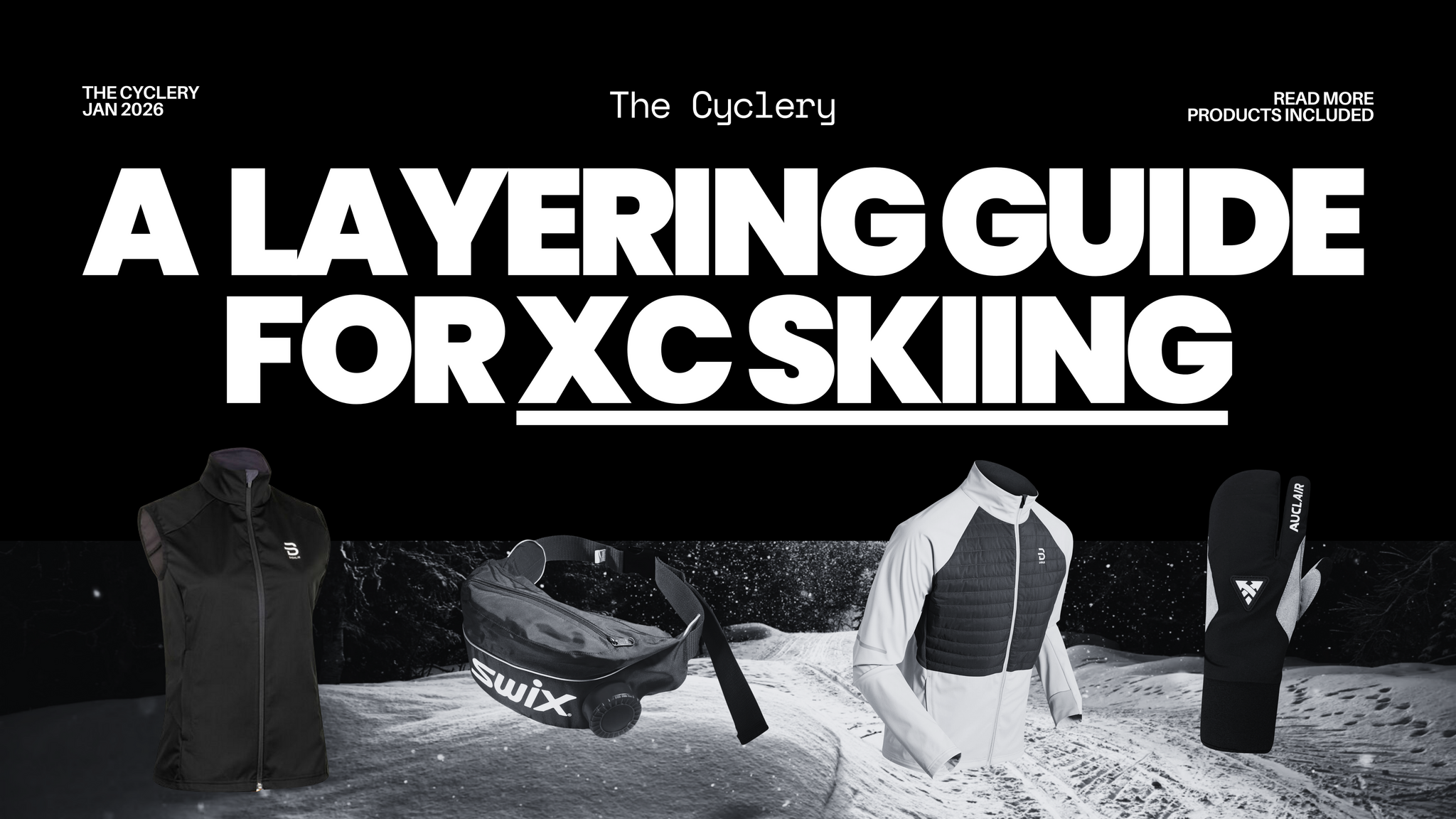
What to Wear for Cross-Country Skiing: A Layering Guide
Cross-country skiing is high-effort, so staying comfortable is less about heavy insulation and more about smart layering. The goal is to stay dry, regulate body temperature, and protect from wind without overheating.
The base layer is worn next to the skin and should be breathable and moisture-wicking. It should fit close to the body so moisture can move away efficiently and help you regulate body temperature. Merino, polyester, silk, or blended fabrics all work well. Avoid cotton, as it traps moisture and can make you feel cold quickly.
Some in-stock options: ALL ON SALE!
- Icebreaker Merino 200 Oasis LS Crewe (Women's)
- Icebreaker Merino 200 Oasis Deluxe Leggings (Women's)
- Icebreaker Merino 200 Oasis LS Crewe (Men's)
- SWIX, RaceX Classic Wind Pants (Men's)
A mid layer depends on temperature and effort level. When you need one, choose a breathable wool or synthetic layer that adds warmth without bulk—think light pullovers, half zips, full zips, or vests. Most skiers don’t use a mid layer on the legs; base layer plus wind-resistant tights or XC pants is usually enough.
Some in-stock options:
- DAEHLIE, Women's Power Vest
- SPORTFUL, Cardio Tech Women's Jersey LS NOW ON SALE!
- DAEHLIE, Men's Momentum Vest
- DAEHLIE, Men's Power Vest
Your outer layer should protect from wind while remaining breathable. For XC skiing, softshell jackets and lightweight XC pants or tights are ideal because they block wind without trapping too much heat—especially when you’re working hard.
Jacket:
- DAEHLIE, Women's Power Jacket
- SWIX, Women's Triac Neoshell Jacket
- SWIX, Men's Delda Light Softshell Jacket
Pants:
Keep accessories lightweight and functional. Thin gloves are usually enough, a headband or light hat helps regulate heat, sunglasses protect from wind and glare, and a drink belt is helpful for longer outings.
- Gloves: AUCLAIR, Men's Stellar 3-Finger Glove NOW ON SALE!
- Headband / Hat : DAEHLIE, Polyknit W Hat OS
- Sunglasses: SMITH, Defy Matte Vintage Tortoise
- Drink belt: SWIX, WC26 lnsulated Drink Belt
Proper fit and moisture control matter more than extra padding. Thin to mid-weight socks are usually best. Thick socks can reduce circulation and make boots feel colder rather than warmer.
NEED HELP CHOOSING?
If you have questions, stop by and ask our team. You can also find more XC ski guides and recommendations on our blog.
Author (R.T - THE CYCLERY)